




Quick Answer: The best roof ventilation for desert climates is a balanced system combining intake vents (such as soffit or eave vents) with continuous exhaust vents (like ridge vents or solar-powered attic fans). This setup uses natural convection to continuously draw fresh air into the lower attic space while flushing scorching 140°F+ trapped air out through the roof peak.
Key Takeaways
- Attics become ovens: Without adequate ventilation, desert attic temperatures can soar past 150°F, radiating heat straight down into your living spaces.
- Slashes your energy bills: Proper airflow reduces the thermal load on your home, keeping your air conditioner from working overtime.
- Extends roof lifespan: Excessive, trapped attic heat bakes your roofing underlayment from the inside out, causing early structural failure.
- Balance is crucial: A truly effective system requires an equal distribution of intake airflow and exhaust output to function correctly.
When summer arrives in the Las Vegas valley, homeowners naturally focus on their air conditioning units. However, there is a silent battle happening right above your head that has an even bigger impact on your comfort and your energy bills: the temperature inside your attic.
On a standard 110°F Vegas day, a poorly ventilated attic can easily act as a solar radiator, reaching a suffocating 150°F or more. This heat continuously pushes down through your ceilings, forcing your AC to work double-time. To fight back, you need to understand the mechanics behind the best roof ventilation for desert climates.
The Golden Rule: Intake Must Match Exhaust
Roof ventilation isn't just about putting a couple of vents on your roof and hoping for the best. It is a highly engineered system that relies on constant air movement. To work effectively in a desert environment, a roof needs two types of vents working in perfect harmony:
- Intake Vents: Located at the lowest point of your roofline (usually under the eaves or soffits). These vents pull cooler, fresh outside air into the attic.
- Exhaust Vents: Located at the very peak of your roofline. Because hot air naturally rises, it migrates to the top of the attic and exits through these vents.
If your intake vents are blocked by old attic insulation, or if you don't have enough exhaust vents at the top, the air stalls out. The heat becomes trapped, baking your home from the top down.
The Best Ventilation Options for Southern Nevada
When evaluating desert roof systems, a few specific configurations stand out for their efficiency:
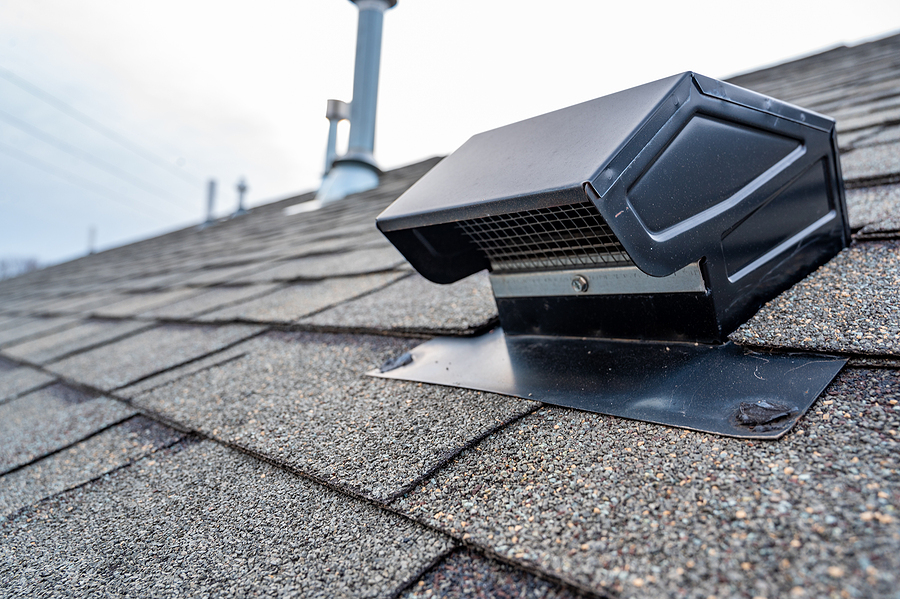
- Ridge Vents: These are continuous, low-profile vents installed along the entire peak of your roof. They are highly efficient because they provide uniform exhaust across the entire attic space without requiring any electrical power.
- Solar-Powered Attic Fans: For homes struggling with extreme heat pockets, solar attic fans are an incredible asset. They feature built-in solar panels that activate the fan precisely when the sun is hitting the roof hardest, actively pulling massive volumes of superheated air out of the attic space.
- O'Hagin Vents (For Tile Roofs): If you have a clay or concrete tile roof, standard ridge vents won't work. Specialized profile-matched vents, like O'Hagin vents, blend seamlessly into your tile design while providing superior airflow.
Frequently Asked Questions
Can I mix different types of exhaust vents?
No, mixing exhaust systems (like combining a ridge vent with a motorized attic fan) can actually disrupt the natural airflow. The motorized fan can end up pulling air downward through the ridge vent instead of drawing fresh air up from the soffit vents, short-circuiting the system.
Will roof ventilation help protect my attic insulation?
Absolutely. Superheated, stagnant air can degrade certain insulation materials over time and cause ambient moisture to settle. Proper airflow keeps your insulation dry, fluffy, and performing at its maximum R-value efficiency.
How do I know if my attic ventilation is poor?
If your air conditioning runs non-stop but your home still feels warm in the late afternoon, or if your ceiling feels hot to the touch when you place your hand against it, your attic is likely trapping heat due to inadequate ventilation.
Cool Your Home from the Top Down
Don't let a poorly ventilated roof drive up your utility bills and age your roofing materials prematurely.
At First Quality Roofing & Insulation, we understand how to make Las Vegas homes energy-efficient. As a GAF Master Elite Contractor, we evaluate your entire roofing ecosystem—from shingles and tiles to ventilation systems and attic insulation. We will calculate the perfect balance of intake and exhaust for your specific home layout.
Contact us today to schedule your Free Comprehensive Attic & Roof Inspection (a $389 value), and find out how we can help you optimize your home's airflow and lower your monthly cooling costs!
📍 Visit us: 3141 Westwood Drive, Las Vegas, NV
📞 Call today to optimize your home's ventilation!